
About the author

Marco C. van der Hoeven (1957) played bass guitar in various Hague pop groups in the early 1970s and, between 1976 and 1984, in all the major Hague punk bands: Mollesters, BVD, and (was the singer for) Hollands Glorie, bands with which he regularly played many Dutch stages and festivals. After that, he played in two reggae bands, Head & Shoulders and Riddim Squad.
From 1977 to 1979, he worked as a theater technician at the Haagse Comedie. In 1980, he founded the first video workshop at the Paard van Troje and filmed many concerts.
From 1983 onwards, he focused on sound engineering. In 1989, he became Head of Technical at Paard van Troje and provided sound reinforcement for many famous artists, such as Curtis Mayfield, Screamin’ Jay Hawkins, the Skatelites, and many others. As a freelancer, he worked at 17 editions of the North Sea Jazz Festival and at festivals such as Crossing Border, Drum Rhythm, and Lowlands.
In 1999, he launched the musical ‘Piaf’ for V&V Entertainment and served as lead technician for two successful seasons. This was followed by work as Head of Technical and Stage Manager at Theater aan het Spui, the Rotterdamse Schouwburg, and Muziekgebouw aan ’t IJ, among others.
In 2013, he launched the website Vintage Microphone World; an informative site about everything related to vintage microphones.
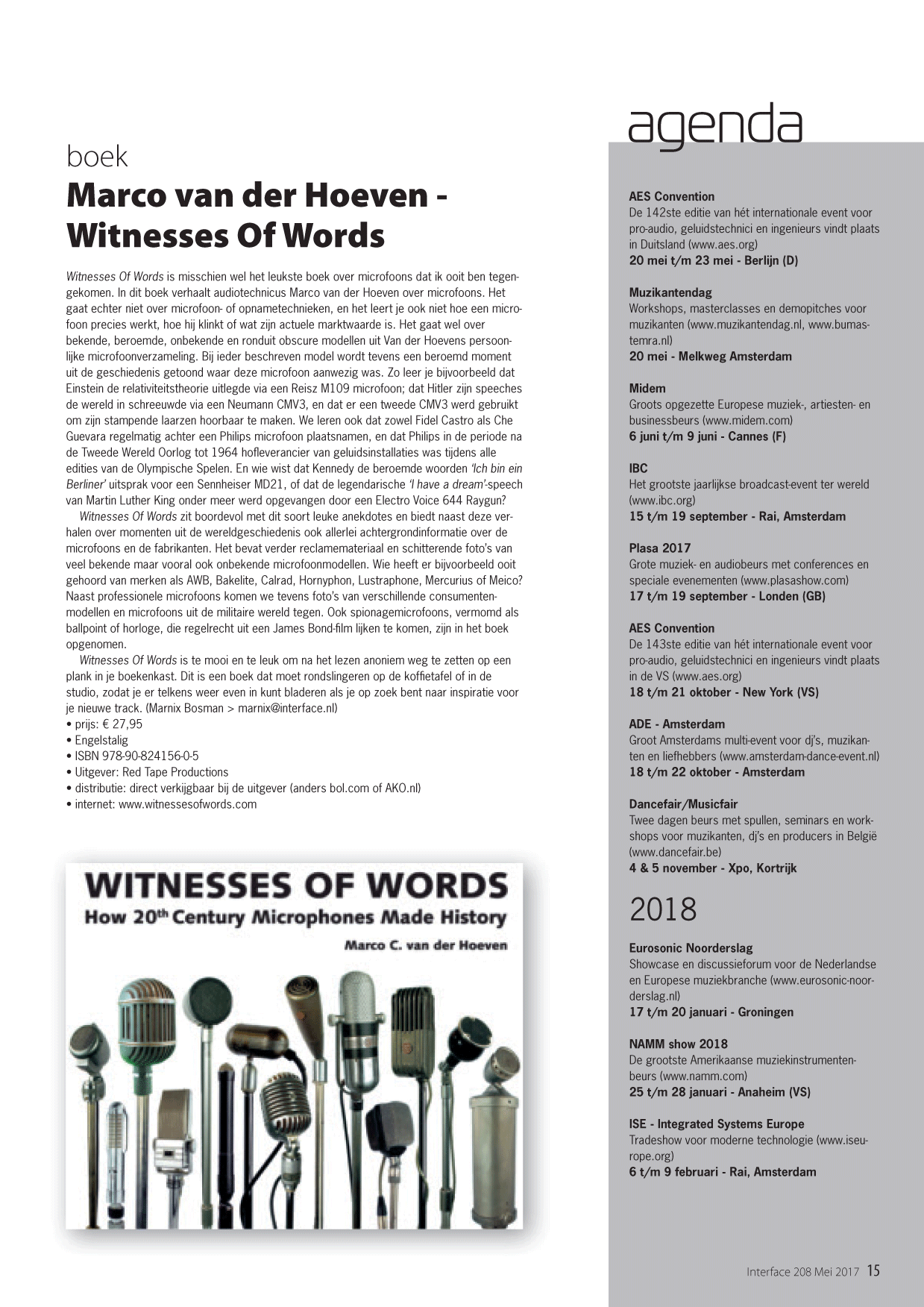
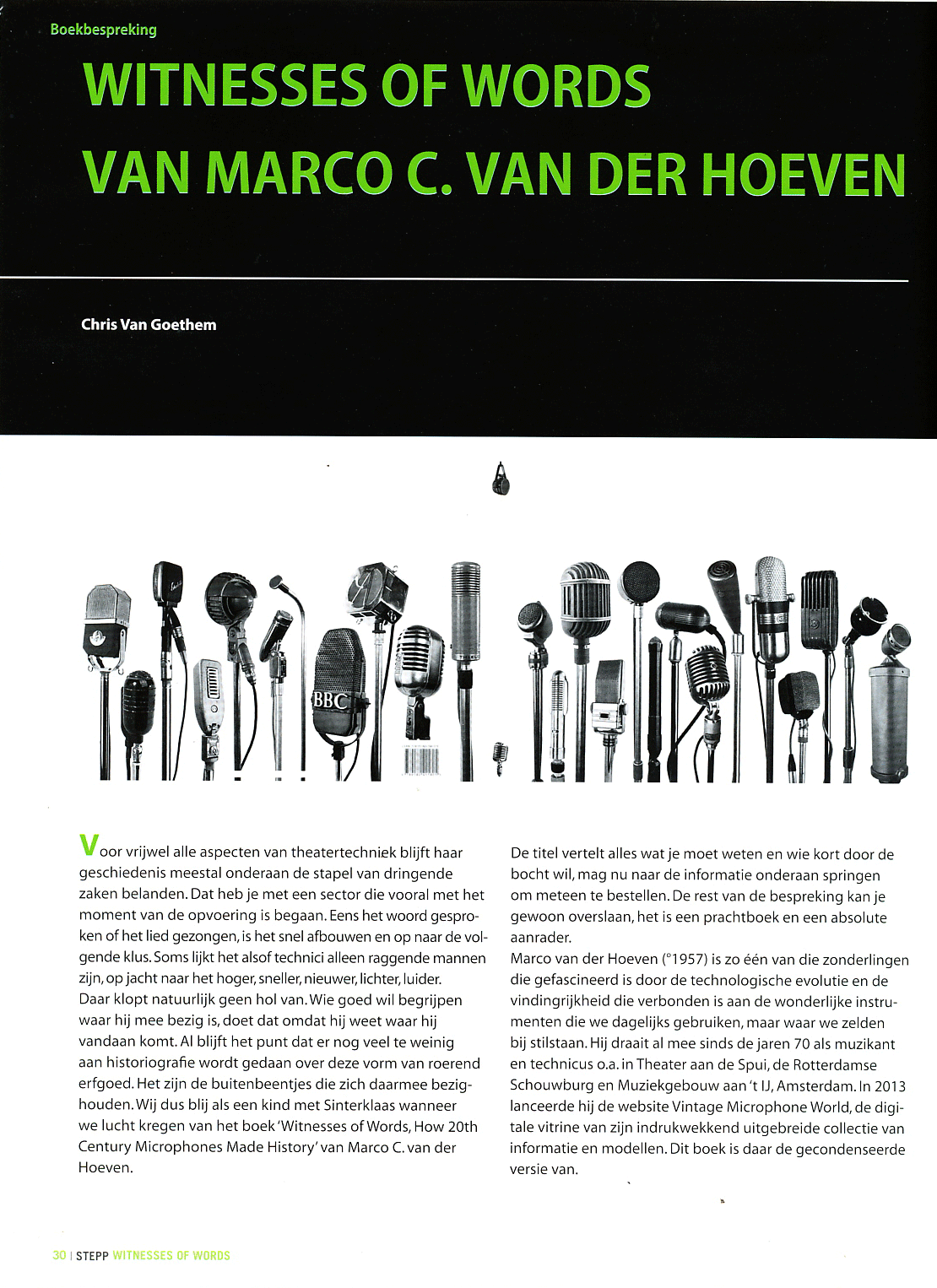
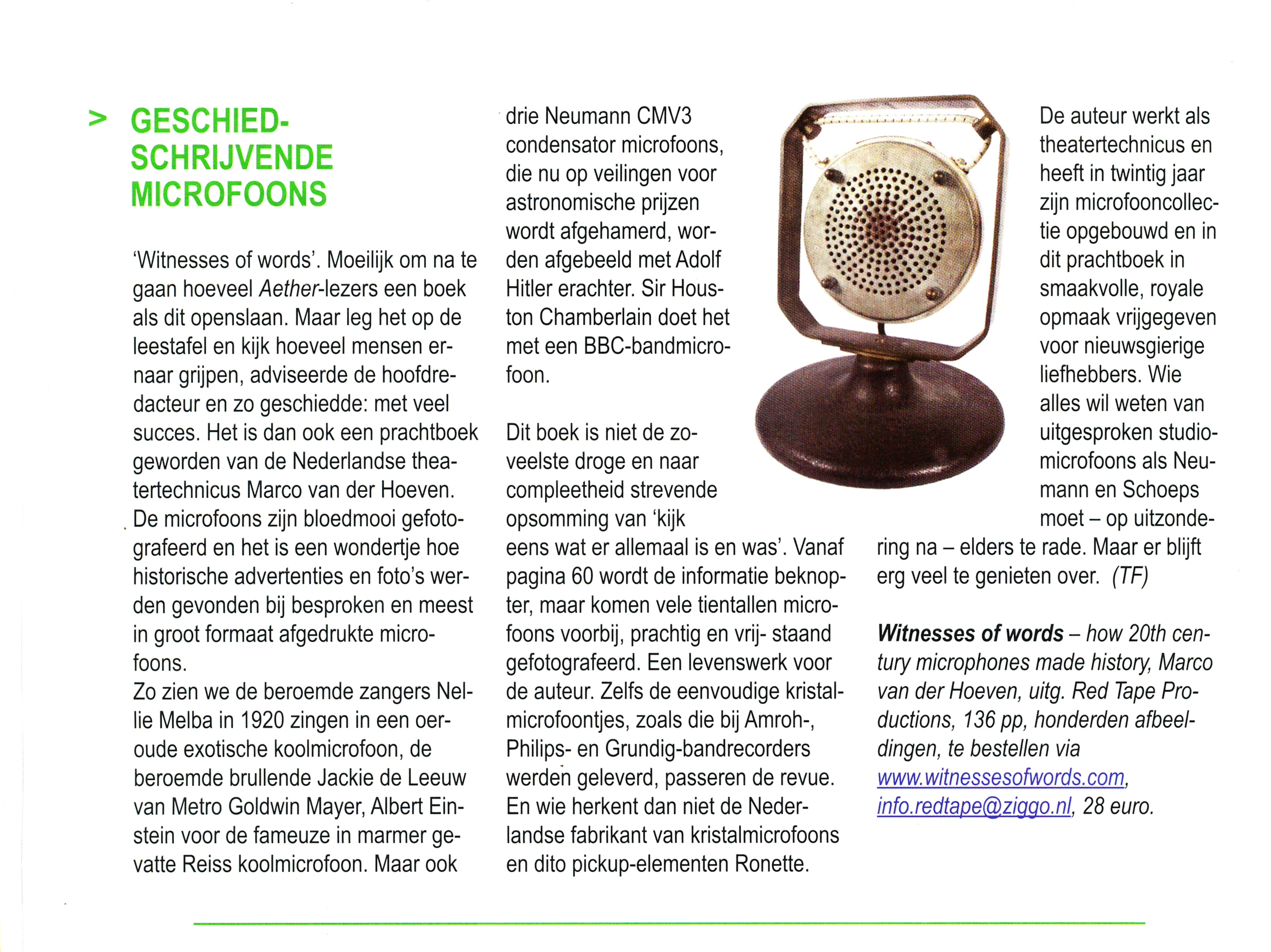
About the book

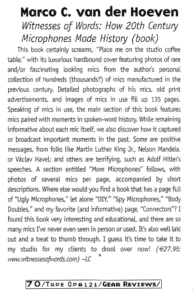
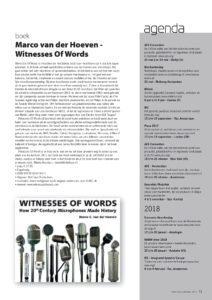
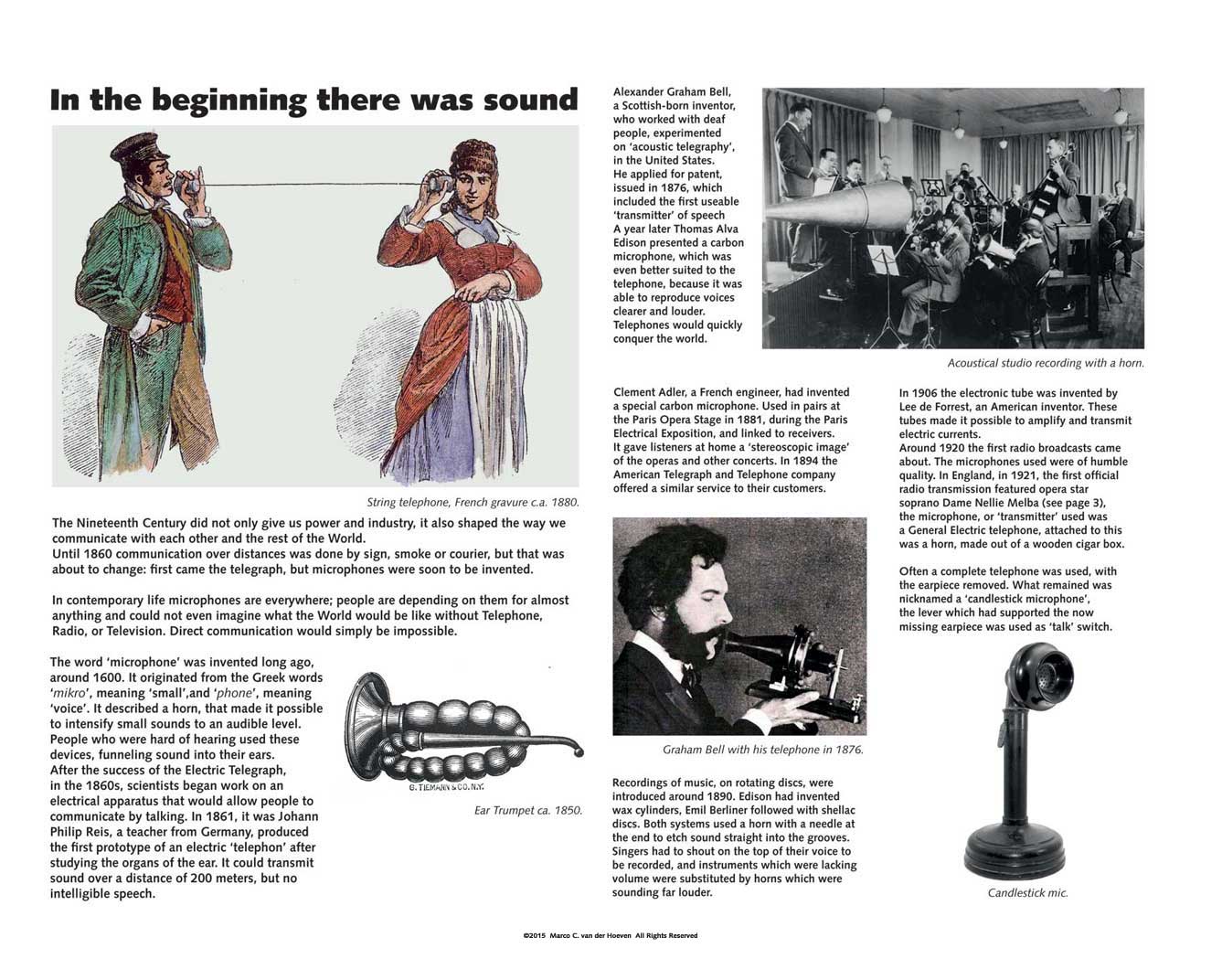
Marco: In the 1990s, I started collecting vintage microphones. Because I wanted to know more about them, I tried to read as much as possible. The available information on the subject was quite disappointing. There were plenty of books dealing with the use and application of microphones. But that did not satisfy my interest in their history, their design, and the role they played in the change the world underwent; from isolated community to ‘Global Village’.
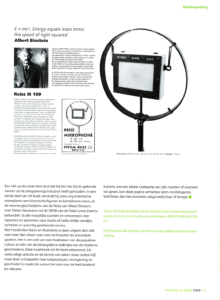
How did the change unfold, from their invention in the early 1900s, to the end of the 20th century? Their metamorphosis from terrifying monoliths that had to be hidden to seductive Art Deco objects. From the futuristic rocket shapes of the 1950s to the models that rest comfortably in the hands of pop stars and karaoke singers. Their rise, since the birth of the radio, to their presence in contemporary life?
For many, their iconic shapes are as well-known as the T Ford and Levi’s 501 jeans. Journalists still rely on their sixty-year-old microphones in dangerous conditions, and recording studios continue to use old microphones because of their sublime sound quality.
The more research I did, the more convinced I became that this story deserves an audience that can be captivated by their forms, their stories, and the variety of models and brands.
This book is for anyone interested in the history of the twentieth century; the memorable figures, decisive events, communication, and design.

Recensies