
All microphone types we use today were conceived in the second half of the nineteenth century. However, it was not until the 1920s and 1930s, those theoretical ideas became practice.
The invention of the triode (an electron tube with three electrodes) in 1906, by Lee De Forest made the amplification of electrical signals possible. This led to experiments with radio, wireless communication, electronic recording of music and speech, sound amplification, and sound for film and television. In short: the beginning of mass communication.
Microphones did already exist; they were part of the telephone, which had been invented in 1876, by Graham Bell and further perfected by Edison. These microphones were therefore the first to be used, but their frequency range was insufficient.

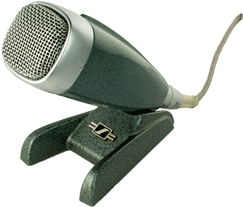
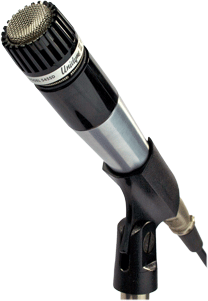

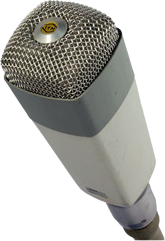
Above: STC 4104, since 1951; Sennheiser MD 21, since 1953; Shure 545, since 1960; Sennheiser MD 421, since 1960, and LEM DO 20, since 1965. All these microphones are still widely used and are still in production.
Many vintage microphones are still used daily, some in the studio and others by reporters/journalists. Microphones from the 1950s or 1960s, or very late ones from the 70s and 80s.
But even the quality of the earliest microphones is underestimated…
Most people think that old microphones sound quite bad, with a lot of noise and crackling. That is because the only way to listen to their quality depends on the old recordings, but that is precisely where the problem lies: old recordings are crackly themselves and, because they are usually recorded on acetate, they are also full of clicks and other background noise. It is usually not the microphones that are the problem.
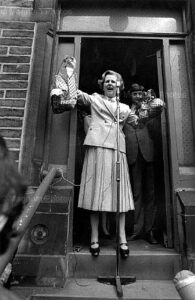
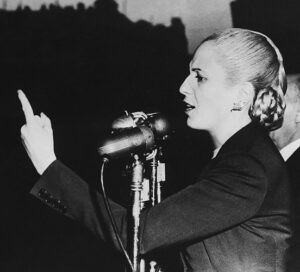
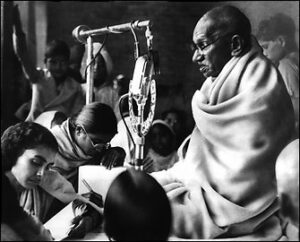
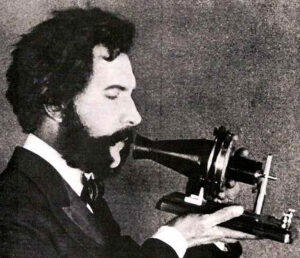
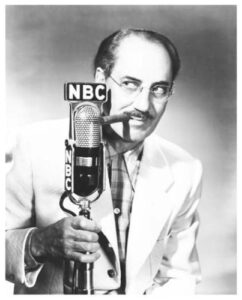
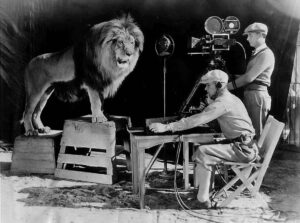
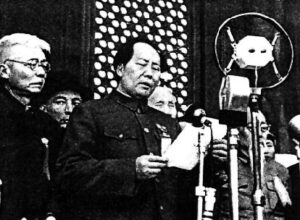
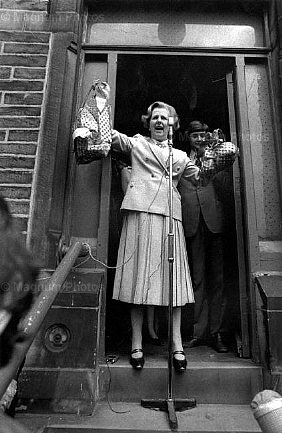
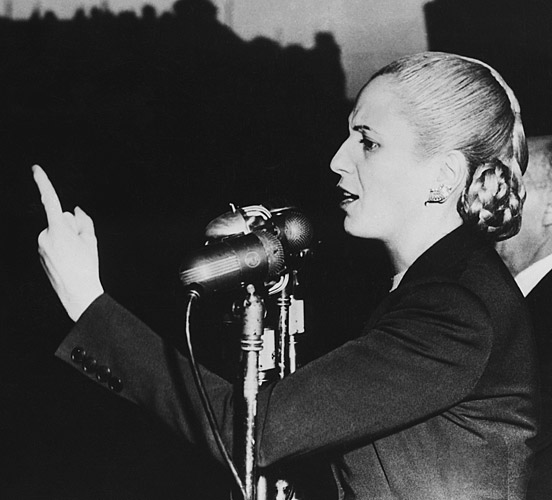


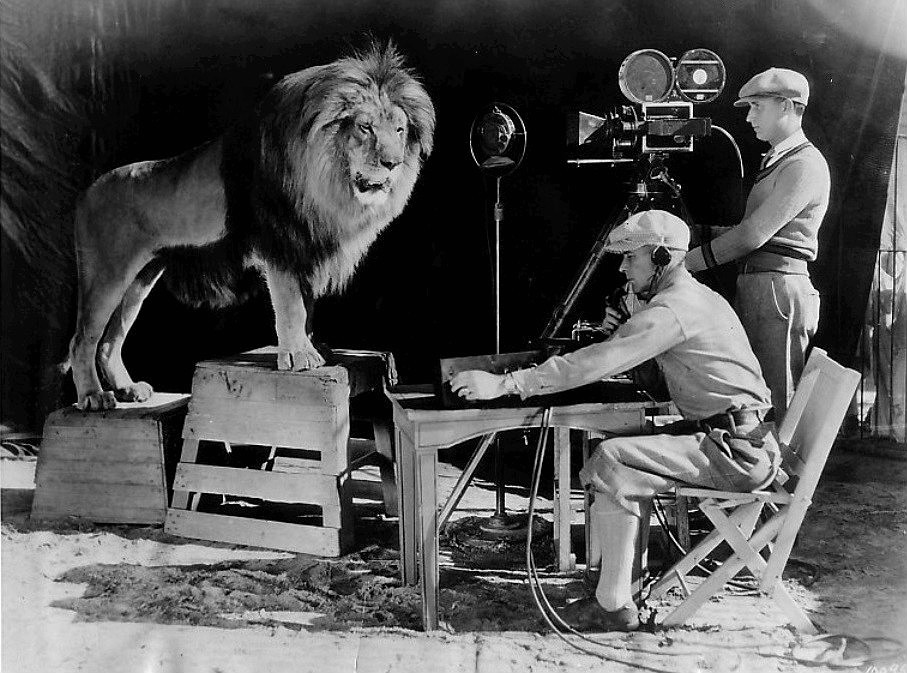
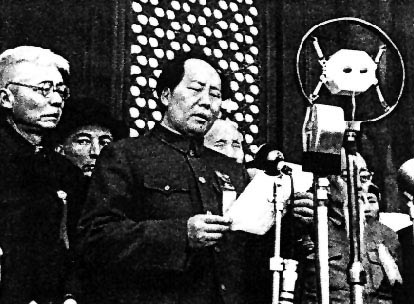
14 milestones in the development history of the microphone:
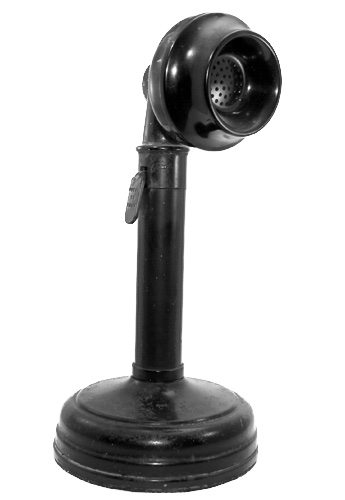
Kellogg T 48
The ‘candlestick’ microphone is a telephone from which the listening part has been removed. The lever it rested on now serves as a ‘press to talk’ switch.
This Kellogg T 48 was produced as a telephone as early as 1901 and was used as a microphone by the US Army until the end of World War II, it was used in the UK as well.
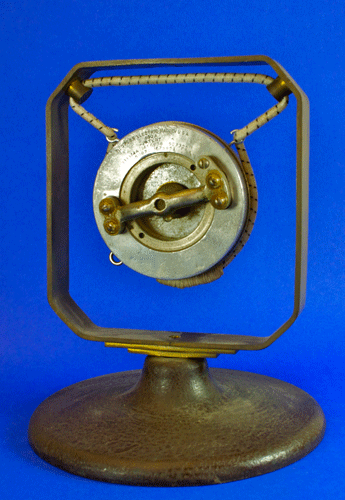
Western Electric 600A
The Western Electric 600A ‘Double Button’ was one of the very first professional-quality microphones.
It dates from around 1925, and was used to record the first inaugural address of an American President (Hoover) for the Talkies, in 1929.

Reisz carbon microphone
The Reisz microphone had much better sound quality and was invented in 1923, by Georg Neumann, while his employer Reisz was on a business trip.
This type of microphone was used for many years by the then emerging radio stations. Marconi manufactured them under license in England; King George V was presented with a royal example.
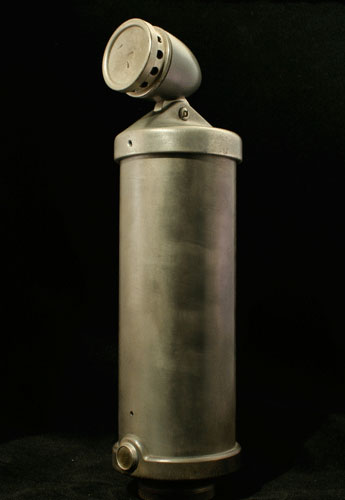
NEUMANN CMV 3
The Neumann CMV 3 condenser microphone, from 1928, was developed by Georg Neumann for his own company, which he had started in Berlin.
Although condenser microphones had been manufactured in the US before, this was the first to be mass-produced. The CMV 3A soon followed, featuring interchangeable elements to achieve different recording patterns. It was also the first reliable condenser microphone. It quickly earned the nickname ‘Hitler bottle’ because the Nazi dictator was often seen with it.
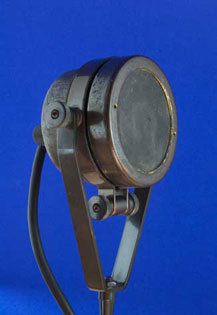
Western Electric 618
The Western Electric 618, from 1931, was the first good dynamic microphone. Unlike condenser microphones, no external power supply was required, making it much less prone to interference and therefore perfect for radio and sound reinforcement (PA).
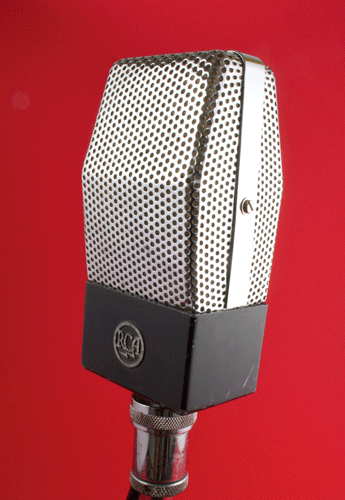
RCA 74B ‘Junior Velocity’
RCA introduced the first ribbon microphones in 1931, this type, the 74B ‘Junior Velocity’, had a Figure of Eight’ pickup pattern and was affordable, making it a widely used microphone in radio studios.
It remains popular among musicians and collectors.

Western Electric 639A
The Western Electric 639A was a large microphone with two capsules in its housing: a ribbon and a dynamic one. By choosing one, or combining both signals, various pickup patterns could be formed: omnidirectional, figure-eight, or directional. Production started in 1939.
In the directional mode, the 639A delivered a much better quality signal than the usual omni’s, which made it ideal for use in sound reinforcement.
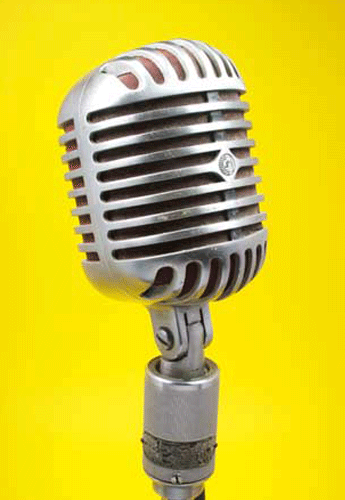
Shure 55
Ben Bauer designed the Shure 55, in 1939. This was the first directional, dynamic microphone with a single element. Its shape is one of the greatest icons in the field of microphones. The design was inspired by the grille of the 1937 Oldsmobile Convertible Coupé. In 1951, a successor was introduced: the smaller 55S, which is still in production today. Both types are known as ‘the Elvis microphone’. In 2014, a limited edition of the original 55 was made as the 5575 LE Unidyne. 5575 copies were produced.
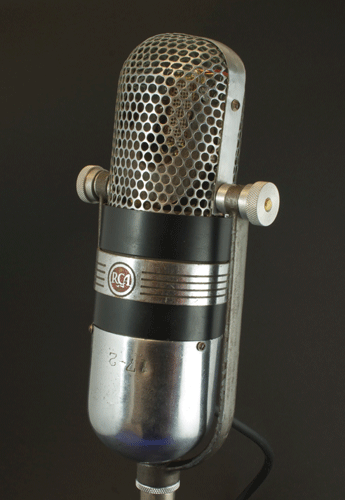
RCA 77D
RCA was the leading supplier to the American professional audio market. Following the success of their bidirectional ribbon microphones, RCA also developed models capable of switching between directional and other pickup patterns, by means of a mechanical shutter behind the ribbon element.
The 77D shown here, from 1945, was one of the very best.
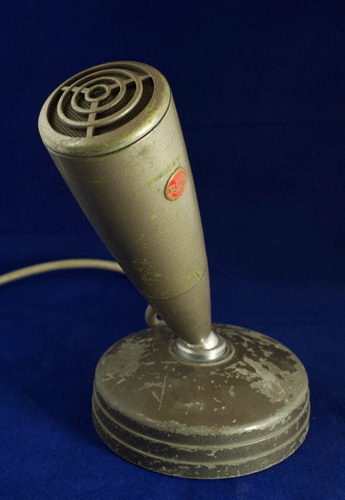
RCA BK1
The RCA BK1, from 1952, was the very first axial microphone in which sound was captured at the top. Until then, all types had a side-mounted element. With this dynamic ‘ice cone’, one could point at the sound source, or an interviewer could shove it under someone’s nose for commentary.
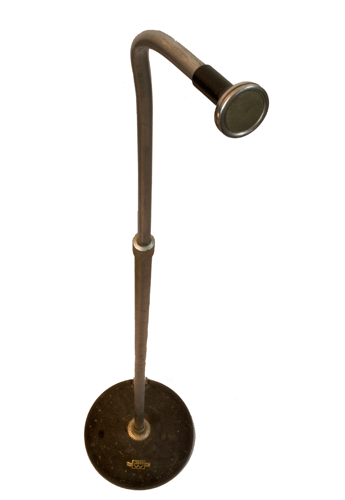
Labor W – DM 3
The Labor W DM 3, from 1949, was one of the first products of the (later renamed into) Sennheiser company. It is a dynamic microphone, with an adjustable height of up to 1.6 meters. The actual recording element is hidden in the base, where the sound is led via the narrow tube.
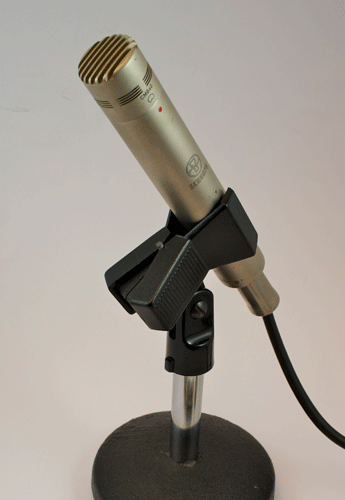
Schoeps CM 640
In the 1950s, the size of microphones became significantly smaller due to the extensive miniaturization of vacuum tubes. A good examples of this was the Schoeps CM 640, which still enjoys great popularity in studios due to its warm and detailed sound.
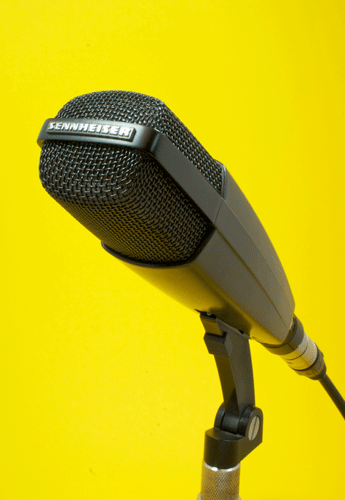
Sennheiser MD 421
There are few microphones as popular as the Sennheiser MD 421. Produced since 1960, initially in grey with silver, it is still manufactured today and used all over the world for both live and studio work.
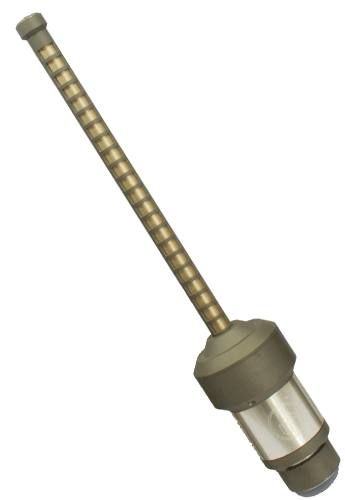
Electro Voice 642
The Electro Voice 642, is a dynamic directional microphone for distant sounds. It dates back to the early 1960s and received an Academy Award from the American film industry in 1963, for its contribution to better sound for film and television. The microphone operates on the ‘Variable D principle’; a system in which sound enters at different distances behind the element through holes in the housing. The result is that there is virtually no proximity effect (low tones are amplified when the sound source is closer). EV still uses this system in some of their microphones.