
Vintage microphones can be found ranging from 5 € to over 15,000 €, so there are plenty of reasons to weigh all the options carefully before making a purchase. Additionally, there are ‘vintage microphones’ that are still in production, so it might be better to buy a new one that comes with a warranty. There may be differences with the originals; correct info is crucial.
Do you want to use a microphone in a historical setting, but are unsure which one it should be? Some 35 years of research helps me to advise you which types can be used in any 20th Century time period. Choosing mics from the wrong time-frame, is to me like seeing a Neanderthal with an iPhone.
Dynamic microphones, are the ‘workhorses’ of sound engineering: these microphones are interesting for sound recording in the studio and for live use on stage.
The most sought-after dynamic microphones are without a doubt the D 12 and the D 19 from AKG, the Beyerdynamic M 201 and M 88, and the Sennheiser MD 421, MD 409, and MD 509. These microphones are sought after worldwide and sell well second-hand.
Condenser microphones deliver a more subtle result, on stage, but especially in the studio. The most coveted types are the Neumann U47, AKG C12 and Telefunken M 251, but those are scarce and cost a fortune. Nowadays there are a number of clones, ranging from affordable to expensive. There are also less well-known ‘sleepers’ that may be considered.
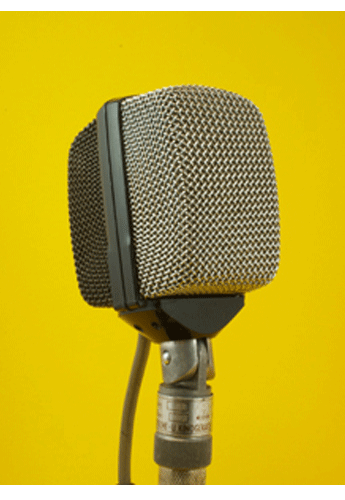
The AKG D 12 is a great microphone, but its quality can deteriorate significantly over time; in many cases, low frequencies are no longer reproduced well. Early versions have 60 Ohms output, the later usually 200 Ohms. The lower impedance results in a weaker output and therefore more noise. A signal booster can get them up to a useful level
An equivalent mic is no longer manufactured by AKG, but if you have to pay a lot for a vintage D 12, it is absolutely advisable to listen to it first to avoid buying a pig in a poke.
The lesser-known Echolette ‘Selectmaster’ version is often much cheaper, while being exactly the same on the inside.
The Echolette Top 12 has a D 12 capsule, but is not the same; it is smaller and lacks the special ‘bass chamber’, but it does have a fat low end.
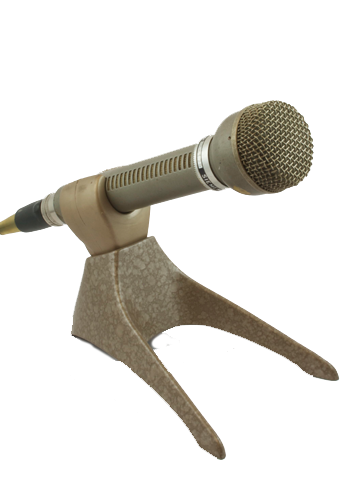
The AKG D 19 owes its fame to its use by the Beatles as an overhead mic for Ringo at Abbey Road Studio. The price is driven up significantly by Beatles collectors. D 19s may suffer from a reduction in low frequencies. Additionally, the switch to attenuate the low frequencies is sometimes broken, and the plastic resonator in the head has often come loose, causing the microphone to rattle. They were made with 60 and 200 Ohm impedance, plus the 19 BK/Hi which can be used with high and low impedance (200 Ohm).
The D 19 was made as OEM for Philips, Revox, Siemens, Uher, and Telefunken, but usually that makes little difference to the selling price. Warm Audio has made a affordable modern re-issue version: the WA 19

The Beyerdynamic M 201 is a great microphone that is highly sought after. Besides for drums (snare and toms and even hi-hat), it is very good for guitar, percussion, trumpet, and accordion. With the included pop shield, it is also great for vocals; a true all-rounder. It is still available new for around 350 €. That is about 150 € more than the second-hand price. Since there is no real difference in sound quality compared to the older models, it may be smart to buy a new one.
Beyer made a very similar version for Revox, the M 3500, which is also great and costs often less

The Beyerdynamic M 88 is also very versatile; it works well with kick drum, piano, wind instruments, percussion, and vocals. The design dates back to the early 1960s, but it is still manufactured (as M 88 TG) and sounds the same. Nowadays, it costs 450 €
The M 88 was also produced as the Dynacord DD 800 (pictured here) and Strasser M 800; in those versions, it is often considerably cheaper.
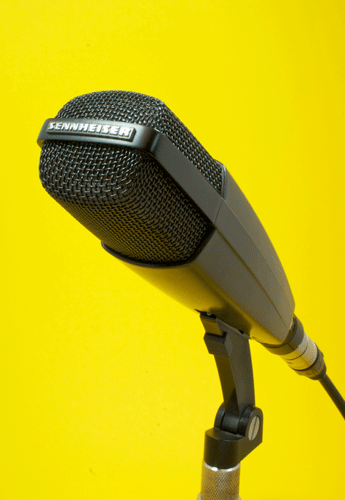
The Sennheiser MD 421 was produced in various versions (also as the MD 521). The modern MK 2 version has more treble and sounds truly different. The older ivory-colored versions and the black ones from the late 70s and later sound essentially the same, although tonal differences can arise due to use and time. Enthusiasts prefer the old types. The old versions had a metal microphone clamp, the new ones a plastic one, but almost everyone hates the attachment because it comes loose easily.
The MD 421s were built with three different types of connectors (Gross Tuchel, Tuchel, and XLR); this makes no difference to the sound. Models without a low-cut filter often sound even fatter. A version in black with a gold-coloured basket, intended specifically for entertainers, is extra rare and expensive.
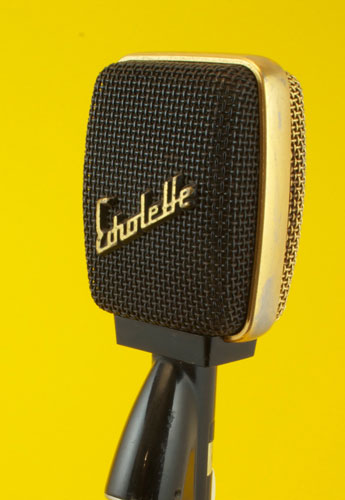
The MD 409 is regarded as the ultimate dynamic electric guitar microphone, but it is also perfect for snare and good for vocals. The asking price is often absurdly high, especially in the U.S. ($750). Although Sennheiser has produced a couple of modern variants, they do not sound the same and therefore represent a mediocre alternative. Time and again, it turns out that the old production methods have become too expensive, and manufacturers opt for a version with a more attractive price, unfortunately of lower quality.
Also sold as the Echolette ES 14. The cartridge was incorporated into more microphones: the Sennheiser MD 403 and MD 407. These were also branded (OEM) as Dual, Fischer, and Harting; these are often significantly cheaper.
The MDS 1 (also sold as the Grundig GDSM 200), MD 405, and MD 408 share a similar cartridge, but the round housing makes them sound slightly different.
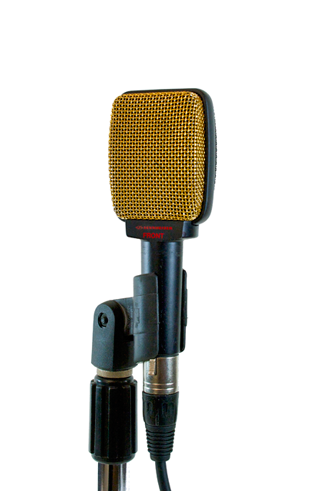
The Sennheiser MD 509 BF (Black Fire) is exactly the same as the MD 409. The Black Fire series was aimed at musicians, while the other versions were intended for the Pro Audio market and had different distribution and sales channels.