
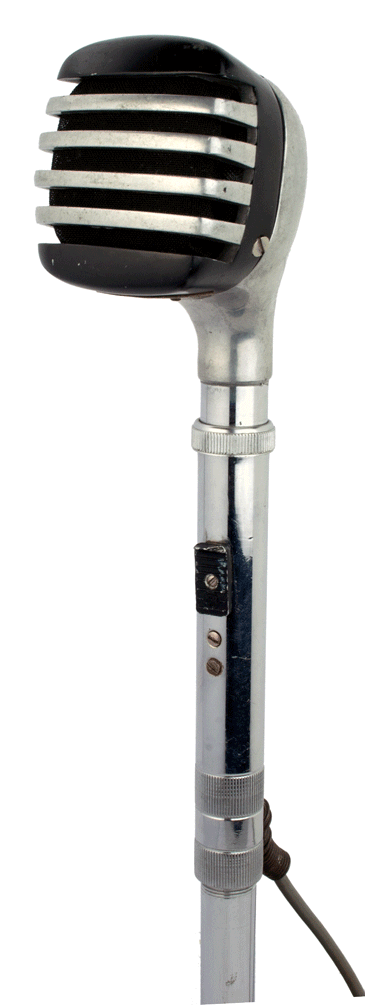
Sometimes the choices for a microphone to describe seem extra difficult; the candidates are numerous, but which should be put in the spotlight?
To break away from our usual suspects, this month I decided to shed some light on a real outsider, nonetheless made by a distinghuised company: Pearl, from Sweden.
The Pearl Mikrofonlaboratorium was established in 1941, in Spånga, Sweden, not far from Stockholm, where founder Rune Rosander began to produce crystal microphones, in his home.
My KM-6 crystal microphone must have been one of the earliest products, meant to accompany early tape recorders from Tandberg, Radionette and other brands.
Like all crystal microphones, its quality is pretty limited, with a frequency range from about 80-8000 Hz, which makes it reasonably suited for speech and amateur music recording. The ad of its later look a like, the KM 8, is directed to that market even if it boasts of high quality.
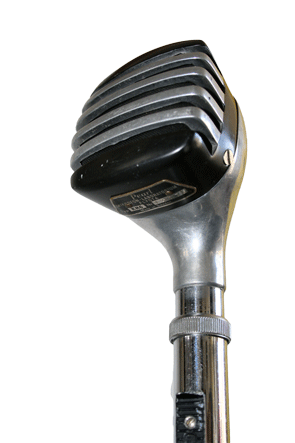
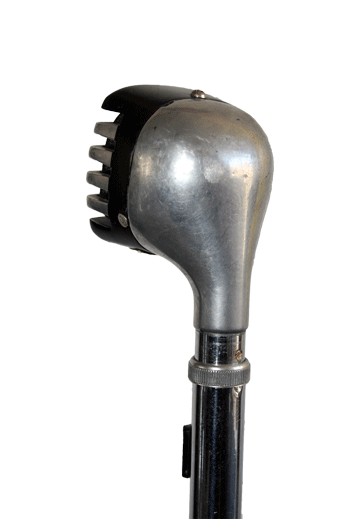
The design of this microphone however is something really different and unordinary. It reminds me of Pippi Longstocking and the looks that old SAAB cars had.
No one in either the U.S.A., or Europe would have dreamt of producing a microphone like this; it may be ugly, who knows, but it sure is special.
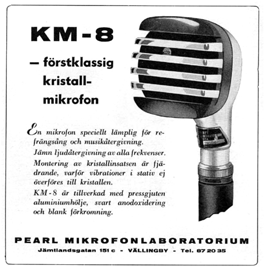
I have not been able to find any information about this specific model, but the KM 8, from 1951, comes really close, and since it must have predated it, it is safe to assume that it must have been made between 1945 and 1950.
Luckily for me, a Dutch music loving tourist brought it along to Holland and sold it when he was tired of looking at it.

The fame of Pearl as a microphone company is based on the later designs of condenser microphones, designed by Rune Mosander, aided by Bernt Malmqvist, who joined the company in 1954, and owned it since 1987.
They designed rectangular capsules for condenser microphones, an idea Pearl that brought them a reputation of making condensers that made Neumann U87s sound shrill in comparison.
Milab, another Swedish company, was a spin off from Pearl and used the same rectangular capsule designs (early Milabs were Pearls). Later the two companies merged again.
Pearl was, until 2025, one of the few innovative microphone designing companies, a fact that should have made the Swedes as proud of Pearl as the are of Pippi.