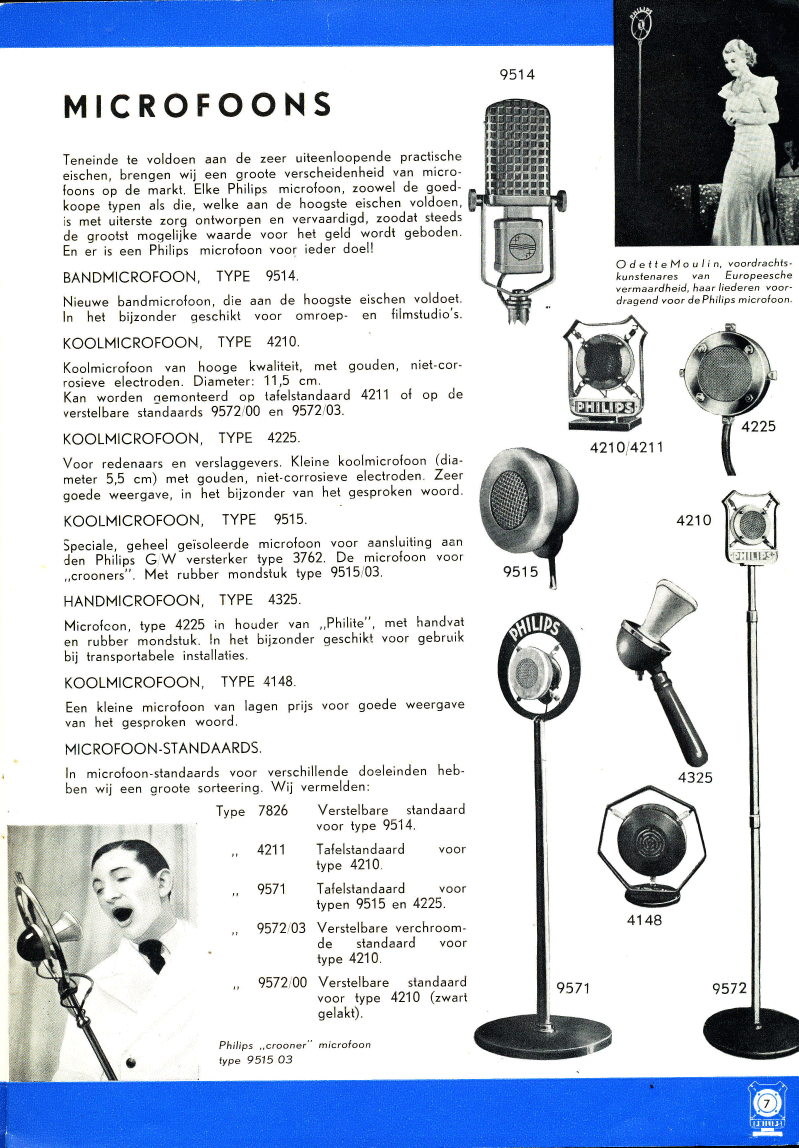
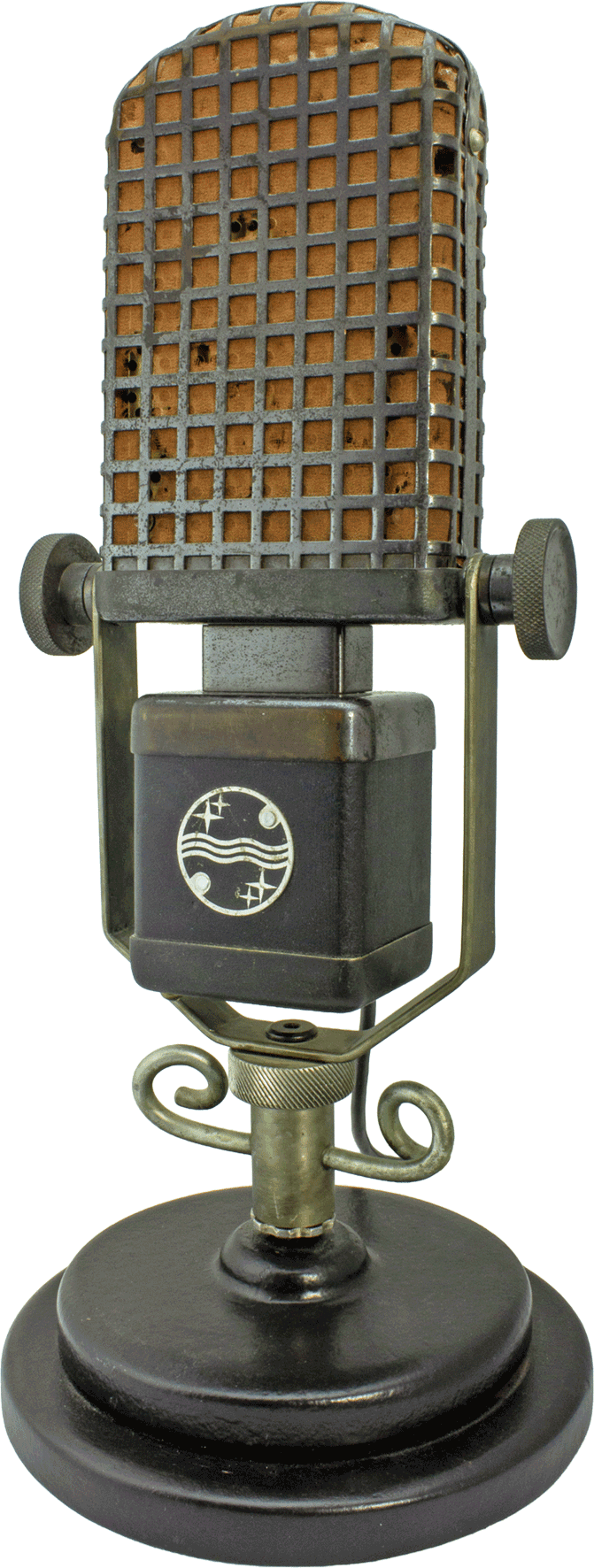
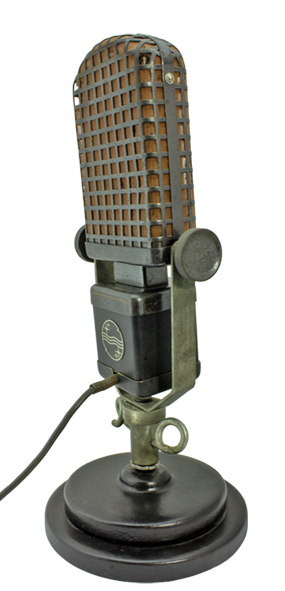
The Philips 9514 was the first ribbon microphone model released by Philips; it was introduced in 1938.
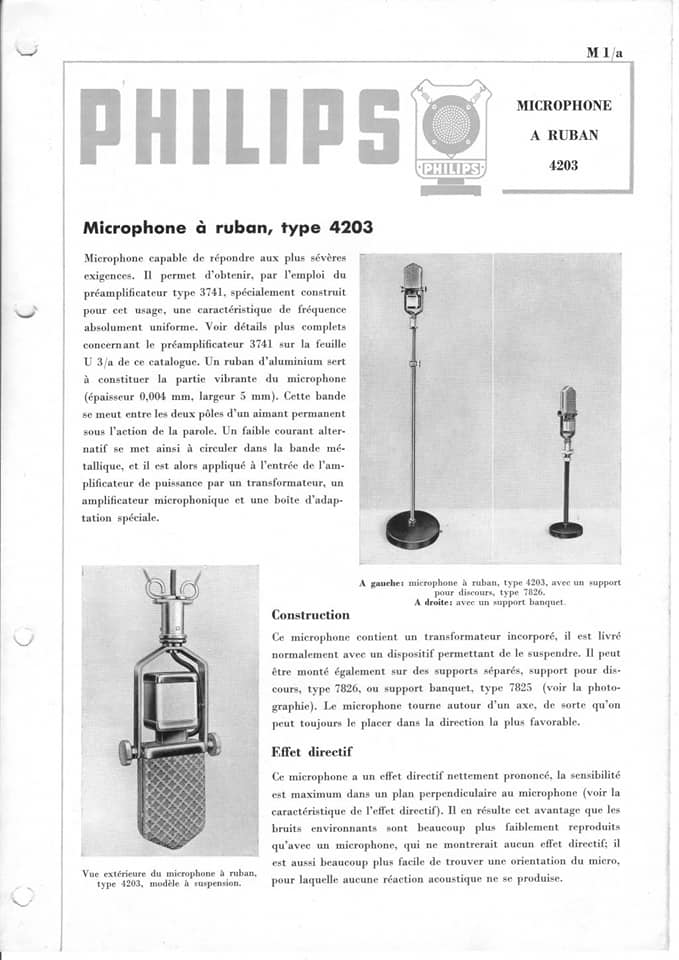
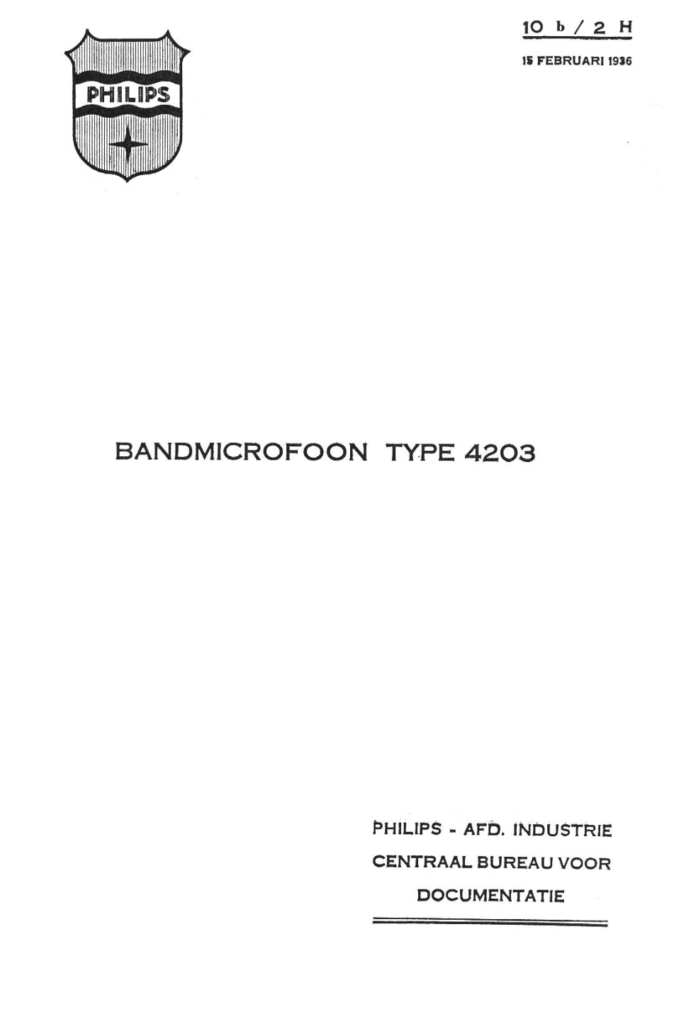
It had previously been sold since 1934—featuring a slightly different grille—as the Philips 4203. After the microphone was improved to offer higher sensitivity and output, it was renamed the 9514.
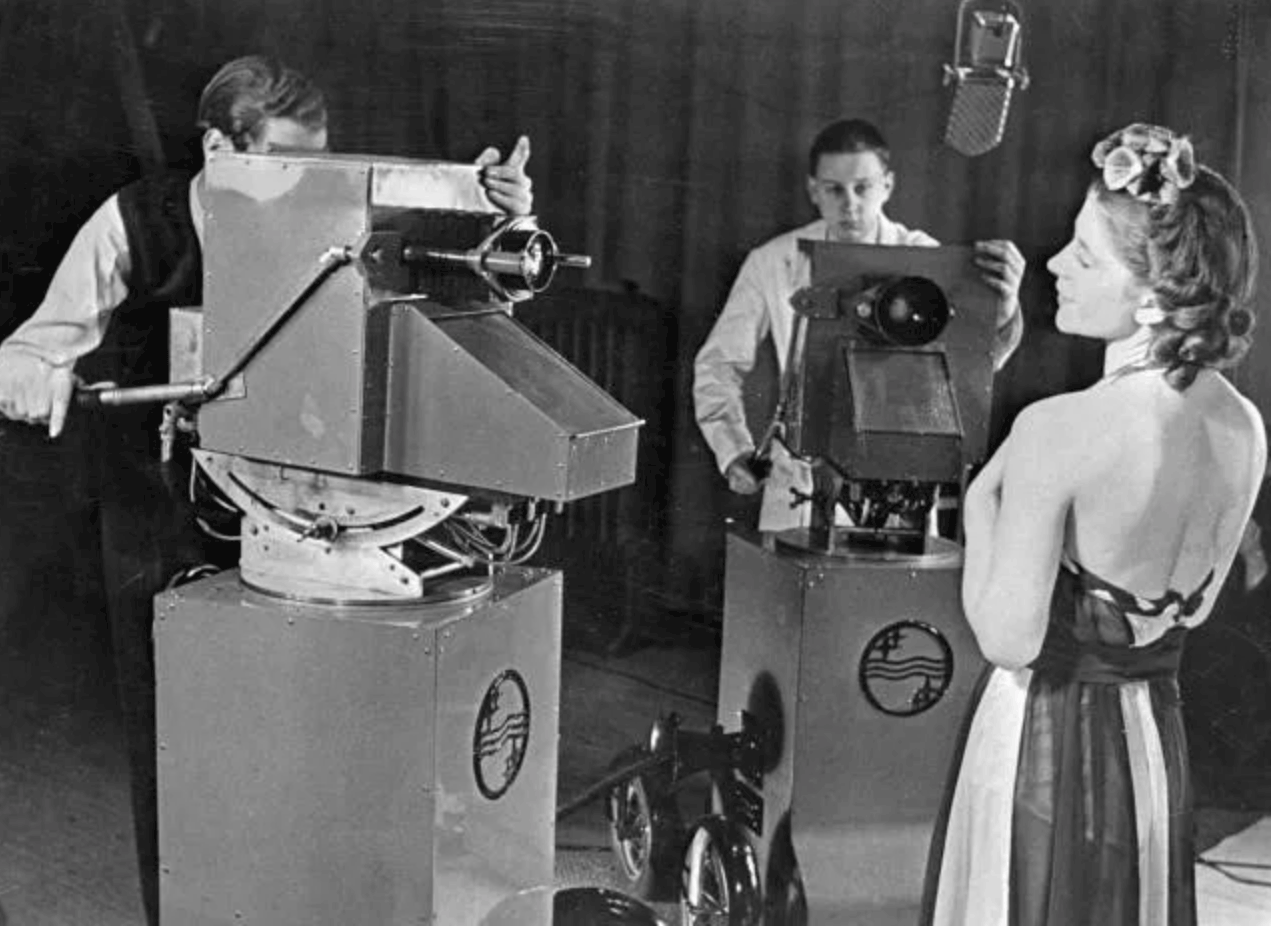
Like most ribbon microphones, it was bidirectional, meaning it was sensitive at the front and back while being ‘dead’ at the sides. This pickup pattern was particularly well-suited for film recording, as the microphone could be positioned next to the camera to avoid picking up noisy camera sounds.
Its design is distinctive: the transformer is housed in the lower section. On the 4203 model, this section did not yet feature a Philips logo.
The 9514 was Philips’ flagship model and vastly superior to carbon microphones, which had an omnidirectional pickup pattern and suffered from constant background hiss.
The dimensions of the 9514 were massive: excluding the mounting bracket, it measured 260 mm in height, 150 mm in width, and 50 mm in depth. With the bracket attached, the height reached 320 mm. It was also heavy, weighing in at 3,340 grams.
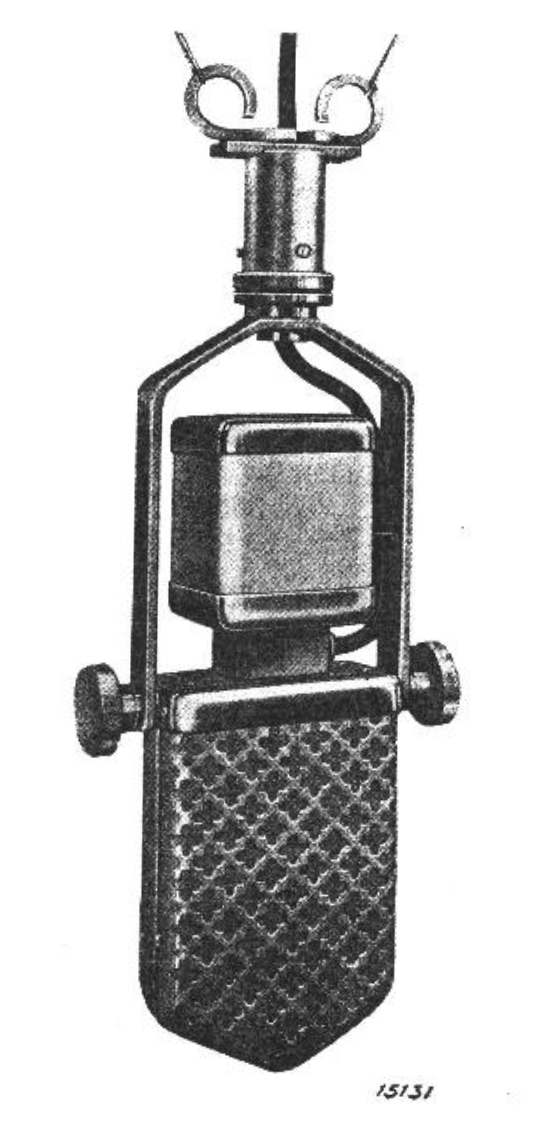
The microphone was available in two versions: one with a bracket for mounting on a floor stand, and another—the version shown here—with a bracket designed for upside-down suspension, with extra securing points, for film or radio recordings.
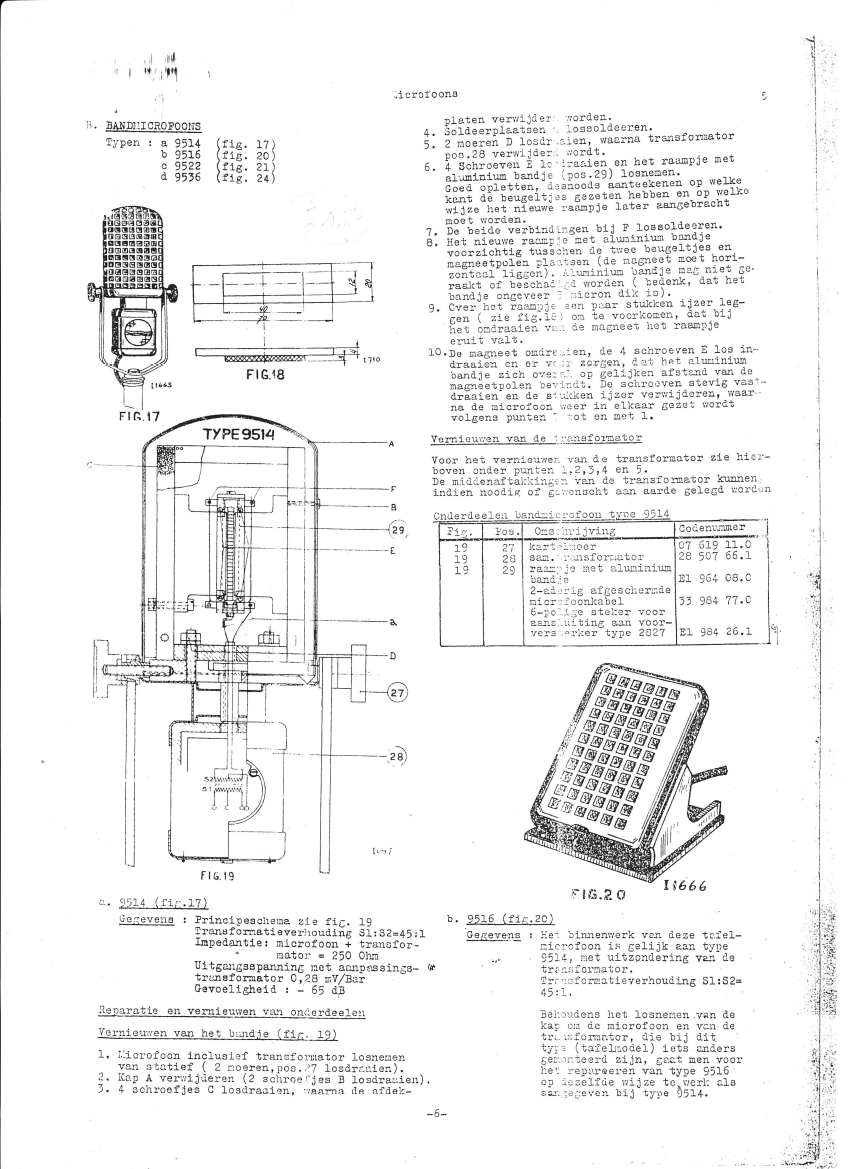
The aluminum ribbon element was replaceable; Philips supplied spare ribbons pre-mounted in frames, allowing users to swap them out themselves.
In 1939, the 9514 was succeeded by the 9522, which utilised the same ribbon and magnet assembly. The 9536 table model also employed this same ‘motor’ mechanism.
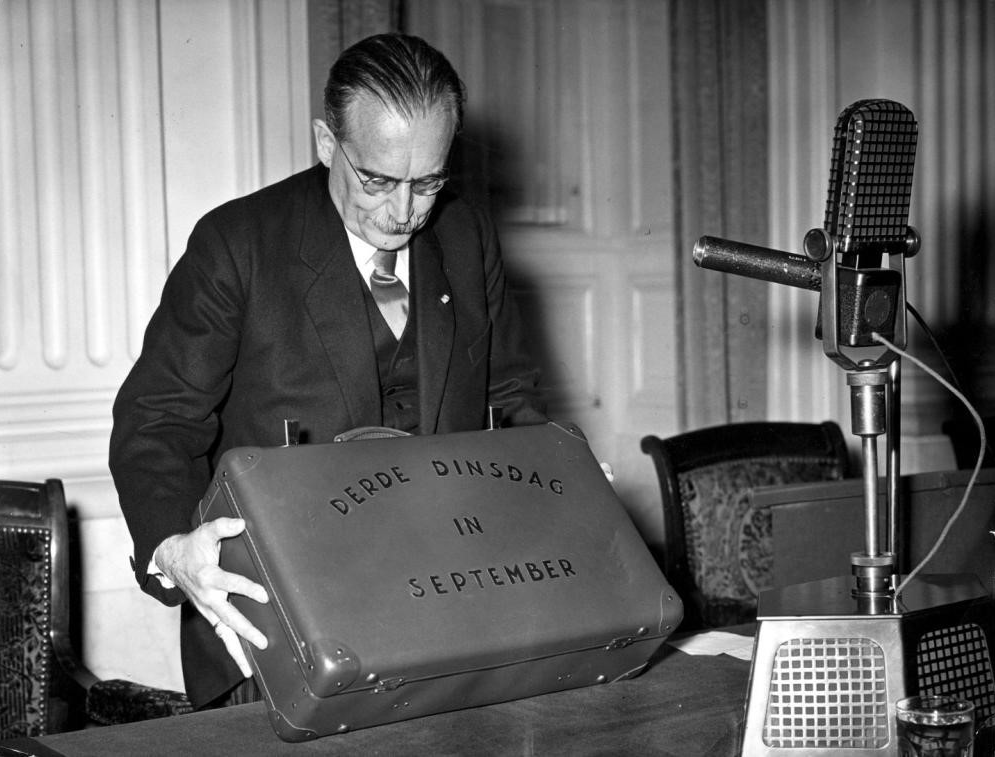
As this was the best Philips microphone at the time, it was also used in parliament; in the House of Representatives, it became the microphone placed on the table in front of the Prime Minister. It remained in use there until the early 1950s. In the photograph shown here, dating from 1950, it appears alongside Prime Minister Dr. Willem Drees Sr., who also served as interim Minister of Finance. The wooden projection serves to prevent from speaking too close to the microphone.