

Shure entered the ribbon microphone market late, in 1952, with the model 300, a bi-directional type, a directional type, the 333, followed in 1955.
Both were professional studio types of excellent quality, with a non reflecting ‘baked bronze’ colour, they also had simpeler nephews, for PA and other modest purposes: the bi-directional 315 and the directional 330 (introduced in 1957), these had a different colour, matted chrome, since these were not meant for tv and film, it was o.k. for them to stand out on stage.
The model 300 was very useful for interviews; placed in the studio between the interviewer and guest, there was no need for a second microphone.
For film and tv, it could be used on a boom pole, anti pff- and anti blast filter made them even usefull for outside use. In the recording studio it could pick up single instruments or complete groups of them.
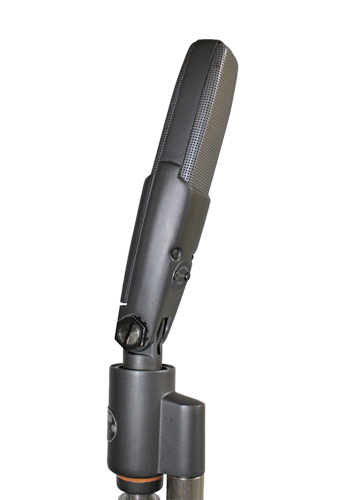
It could even be used on live, stage. The built-in vibration isolator assured that rumble did not reach the ribbon. The head could be tilted 45 degrees forward and 90 degrees backward, to precisely aim the mic in the right direction.
Like the 330, it had 3 output settings: 50 Ohms, 150 Ohms and Hi Z, under a small plate at the back, plus a voice/music switch at the front. Frequency pick up was pretty straight between 40-15.000 Hz.
The dimensions of the 300 were very modest: 234 mm long, 37 mm wide and just 28 mm thick, it weighed 582 grams; it was smaller and lighter than many of the earlier ribbon types of other manufacturers. Compare it to the RCA 77D/DX, 290 x 94 x 63 mm, weighing 1,75 Kg, and it becomes clear that Shure had produced a very elegant and small ribbon mic of quality. The frequency pick up of the 300 was much flatter than the RCA’s response, in bi-directional mode.

The 300 remained in production for 30 years (1952-1982), long after most ribbons had become extinct and condenser- and dynamic microphones had taken over their dominance in the studio’s.
In the digital age, ribbons are once again popular, and these Shure models definitely deserve a place amongst the best of them. Although Shure is a highly respected microphone maker, their vintage ribbon microphones are not as well liked as the RCA’s, which is a shame, since they sound very good, but it does offer the opportunity to find them second hand for a much more reasonable price than the RCA’s are bound to fetch.
The model 300 delivers that beloved smooth and detailed sound, excelling on vocals, stringed instruments, drum overheads and as a room microphone. There is no harshness and, if it is not used too close, the proximity effect is pretty modest. For some, recording with a bidirectional microphone may be uncommon, but it is definitely worth to explore the possibilities of the wide front and back pick up angle and the ‘dead’ sides.
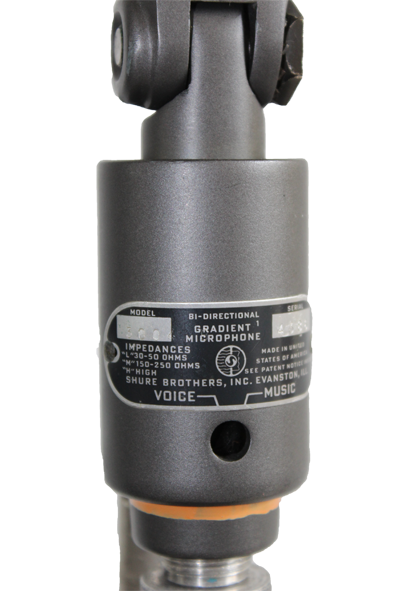
The Voice/Music switch seems to be the microphone’s weakest point, it may cause the sound to break up, cleaning the switch solves the problem in most cases.
Shure 300 sound
Shure 300 banjo recording